A full wedding dance floor is built long before the first song plays. These wedding dance floor tips come from seven years of DJing weddings across Los Angeles, Orange County, San Diego, and Temecula, where the nights that stay packed from the first open dance to the last song have one thing in common: the couple made a few smart decisions about the room, the timeline, and the music.
None of these decisions are expensive, and most of them take one conversation with your DJ and your planner. This guide covers fifteen of them in the order you will probably make them, so you can use these wedding dance floor tips as a checklist while you plan your reception timeline.
In this guide
- Why a full wedding dance floor matters
- Wedding dance floor tips: choose the right room
- Wedding dance floor tips for your reception timeline
- Wedding dance floor tips for planning the music
- Look after your guests
- Set the tone yourselves
- Southern California venue notes
- Wedding dance floor tips FAQ
Why a full wedding dance floor matters
When guests talk about a wedding afterward, they rarely mention the centerpieces or the order of the toasts. They talk about whether the night was fun, and for most receptions that comes down to the wedding dance floor. A full wedding dance floor tells everyone in the room that the party is working, it gives your photographer and videographer the energy they need to capture, and it gives you and your partner a chance to enjoy your own celebration with the people you invited.
The good news is that a lively dance floor is mostly a planning problem, and planning problems have practical answers. You do not need a perfect playlist or an enormous budget. You need a room that supports dancing, a timeline that protects it, and a DJ you trust to adjust as the night unfolds.
Wedding dance floor tips: choose the right room
Guests dance where they can see and hear the party. If the wedding dance floor is hard to find, tucked into a corner, or separated from everything else, you will spend the night fighting the layout. These four decisions fix most layout problems before they start.
1. Put the DJ right in front of the dance floor, or close to it
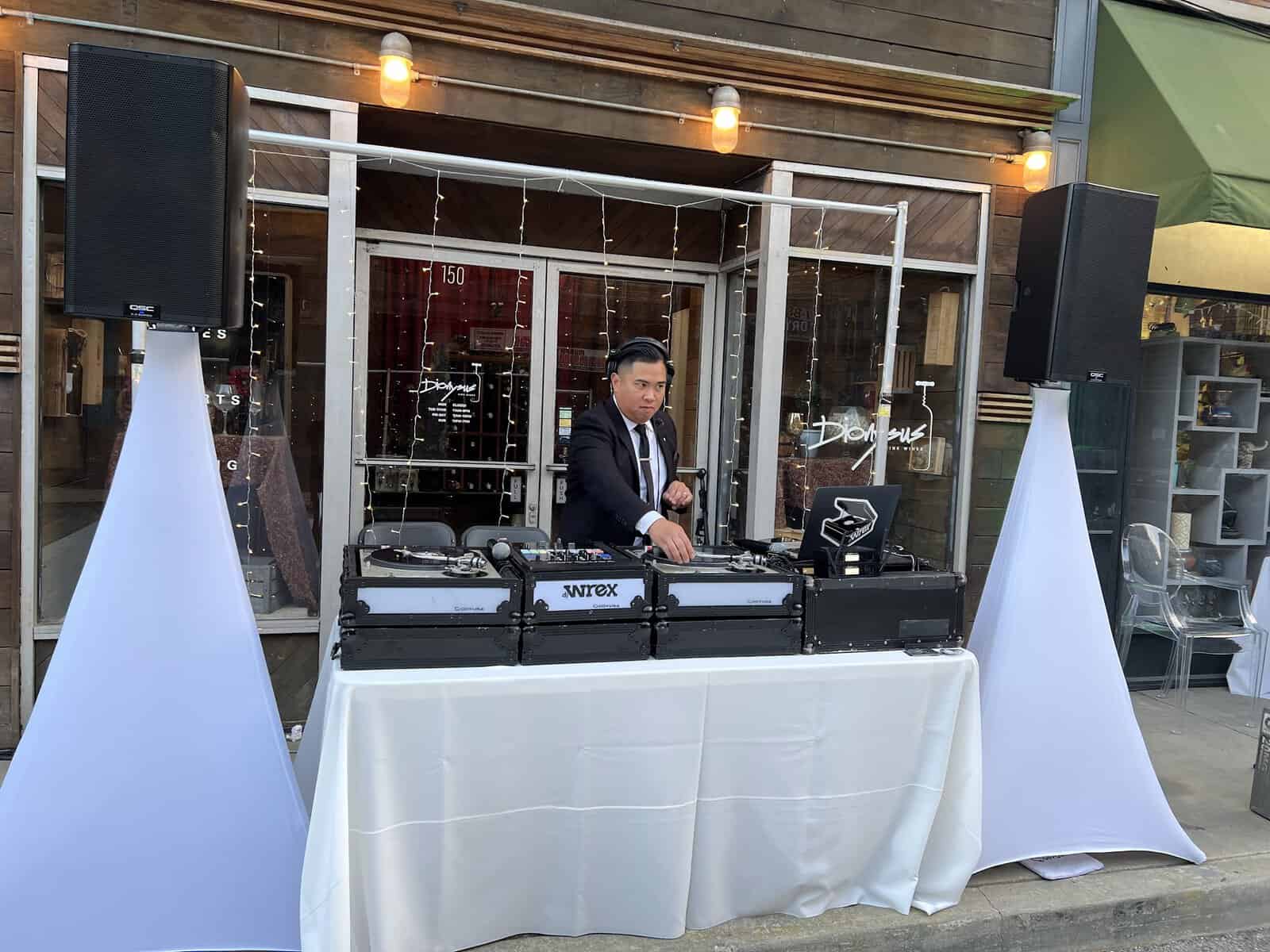
If your venue allows it, place the DJ at the front edge of the wedding dance floor, or as near to it as the room permits. From there the DJ can see faces, notice who is tapping a foot at their table, and respond song by song. Guests also feel closer to the music, and the dance floor feels like the center of the room instead of an add-on.
If the venue has a default spot for the DJ that sits far from the floor, ask early whether the setup can move. It is much easier to change before load-in than during it. This is the first of our wedding dance floor tips because it affects everything that follows.
2. Keep the bar and photo booth in the same room as the DJ
Every time a guest walks to another room for a drink or a photo, the wedding dance floor loses a person, and sometimes a whole group follows. When the bar and the photo booth share a room with the DJ, guests can grab a drink, take a quick photo, and be back on the floor in a couple of songs. If your venue splits these across buildings or patios, that is worth asking about before you sign.
If it is not possible, at least place the bar as close to the wedding dance floor as you can and keep the booth where guests pass the music on the way back. Of all the wedding dance floor tips here, this one is the easiest to check on a venue tour.
3. Pick a space where the lights can go down and sound is not restricted
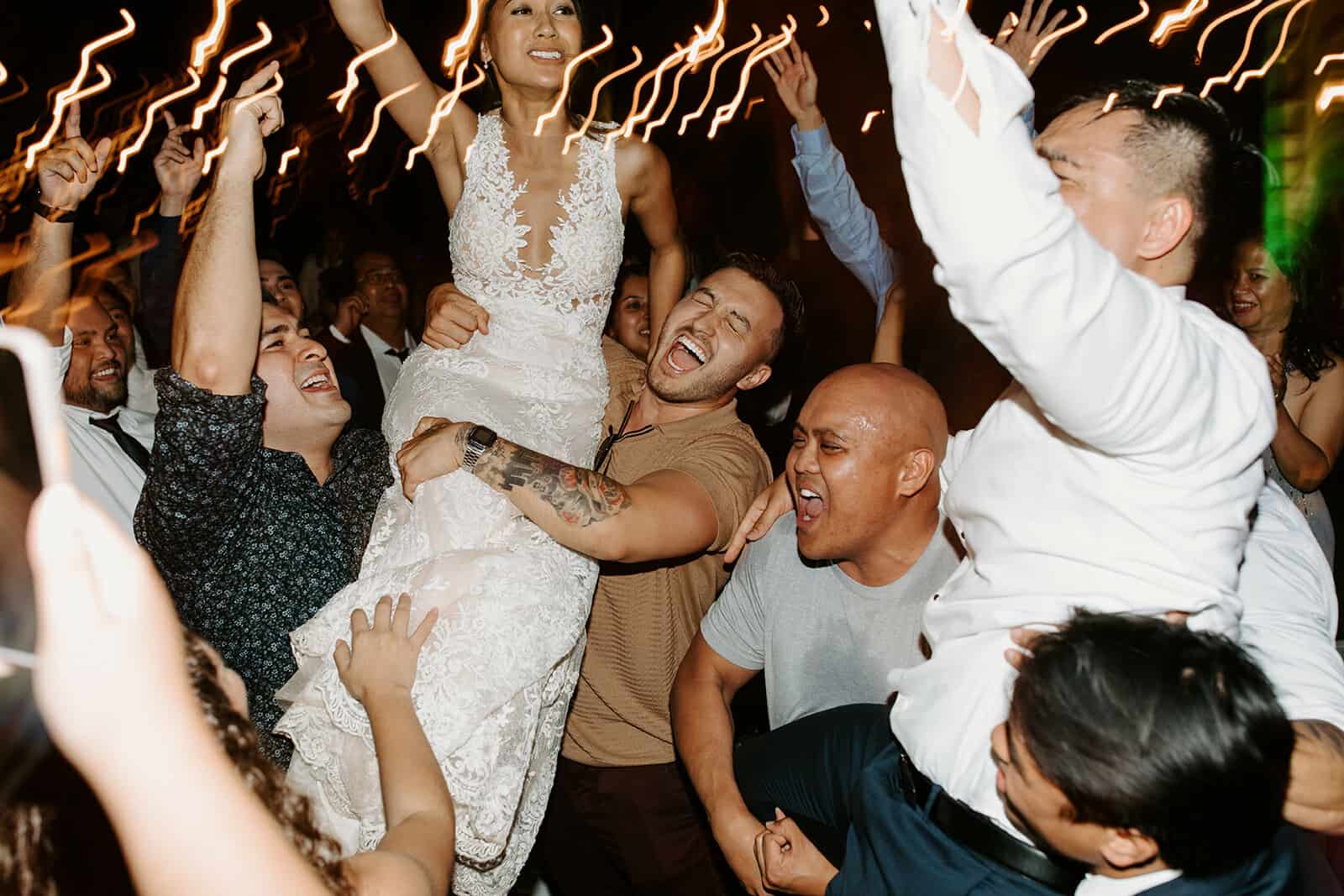
Two things change a room faster than anything else: lighting and volume. Dim lighting helps guests relax and gives the wedding dance floor an energy that bright dining-room lights never will. Sound limits are the other half. Some venues cap volume or end amplified music early, and a cap makes it hard to build the energy a reception needs. Ask your venue two direct questions: can the lights be lowered for dancing, and are there any sound restrictions or cutoff times?
If the answer to the second question is yes, ask whether there is a different room or a different part of the property where those limits do not apply. These wedding dance floor tips only work if the room allows them, so confirm both answers in writing.
4. Size the dance floor for the crowd you expect
A floor that is too big looks empty even when people are dancing, and one that is too small pushes people back to their tables. A common planning guideline is to size the floor for about two thirds of your guests dancing at once, which you can read more about in this guide to ensuring a full dance floor.
If your venue gives you a large open area, define the dance space with a floor, lighting, or furniture so the party feels gathered instead of scattered. Sizing is one of the wedding dance floor tips couples skip most often.
Wedding dance floor tips for your reception timeline
Your timeline decides whether the dance floor builds momentum or restarts every twenty minutes. A good dance set needs room to grow, and every interruption sends guests back to their seats. The next four decisions keep the energy moving in one direction.
5. Get all the formalities out of the way before dancing starts
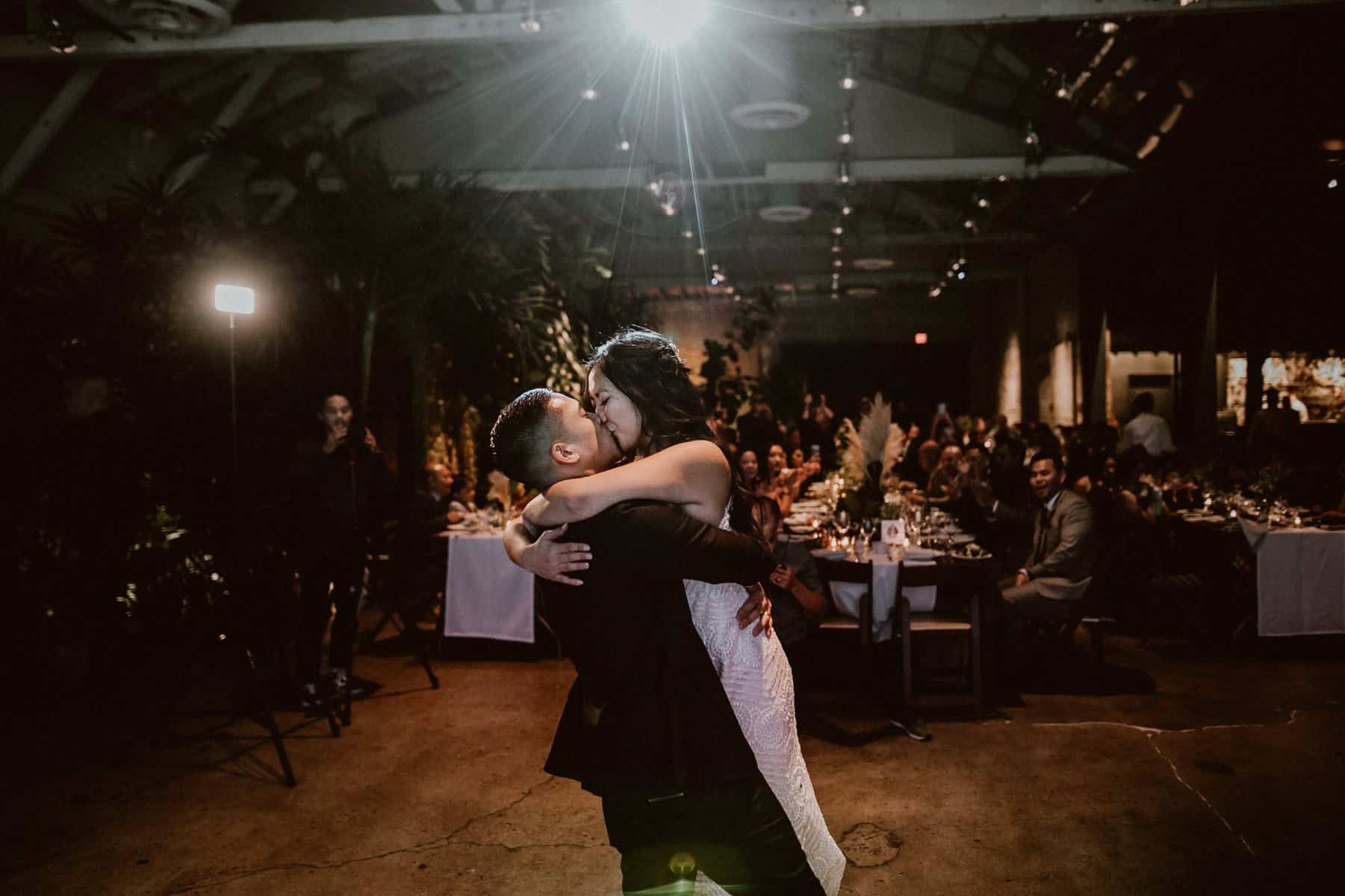
Toasts, parent dances, the cake cutting, and the bouquet toss are all worth doing, but scattering them across the night means guests keep sitting down and standing back up. Group them early, ideally before or during dinner, so that once the dancing begins, it can run. When we meet with couples for a final planning meeting, this is the one timeline change that makes the biggest difference in how the night feels.
Dancing becomes the main event instead of something that happens between announcements. Of all our wedding dance floor tips, this timeline change has the biggest payoff.
6. Take the group photo on the dance floor right before open dancing
This is a small trick that works well. Call everyone onto the wedding dance floor for the group photo, then move straight into open dancing. Your guests are already standing on the floor, they are already together, and the first song starts while they are still there. It is far easier to keep someone on the floor than to bring them back to it, and this timing does the hard part for you.
Talk to your photographer and your DJ in advance so everyone knows the order. It is one of the wedding dance floor tips photographers appreciate too.

7. Start the dance block earlier rather than later
Guests have a limited amount of energy, and the later the dancing starts, the less of it is left. If your reception runs several hours, plan to open the wedding dance floor while most of your guests are still fresh, including older relatives who may leave early. A dance block that begins earlier gives more of your guests a chance to be part of it, and it gives the DJ more time to build the night up gradually instead of starting from a tired room.
Starting earlier is among the wedding dance floor tips that older guests thank you for.
8. Plan announcements ahead so the energy does not drop mid-set
Announcements are necessary, but an unplanned one in the middle of a strong set can empty the floor. Decide in advance what needs to be announced, when, and by whom, and give that list to your DJ. Where possible, tuck short announcements between songs or before dancing begins.
If something has to interrupt the wedding dance floor, such as a send-off or a late dessert, plan it for a natural break rather than the peak of the night. It is one of the quiet wedding dance floor tips that protects momentum.
Quick check: Before you finalize your reception timeline, count the times guests are asked to sit down after the dancing starts. The goal is zero. Every one you can move earlier protects your wedding dance floor.

Wedding dance floor tips for planning the music
Music is where couples feel the most pressure, and where a little structure helps the most. You do not need to build a three-hour playlist. You need to give your DJ the right kind of information and then let them work.
9. Ask your guests on the invitation what song gets them on the dance floor
One of the easiest ways to learn what your crowd wants is to ask them. Add a line to your invitation or your wedding website that asks guests to share the song that will get them dancing. You will end up with real requests from real people instead of guesses, and guests feel included before they even arrive.
Pass the list to your DJ as a set of ideas, not a script. Some songs will fit the night perfectly, and some will not fit the moment, and a good DJ will know the difference. This is one of the wedding dance floor tips that costs nothing.
10. Give your DJ a short list of must-plays and do-not-plays
A short, clear list works better than a long one. Pick a handful of songs that matter most to you, and a few that you never want to hear. The do-not-play list is just as valuable as the must-play list, because it protects your night from songs you dislike. Keep the must-play list short enough that your DJ still has room to read the floor, and tell them which songs are essential and which are nice to have.
If you want a longer playlist for cocktail hour or dinner, share it separately, since those parts of the night have different goals. Following these wedding dance floor tips on the music is easier with a short list.
11. Start the dance floor with songs every generation dances to
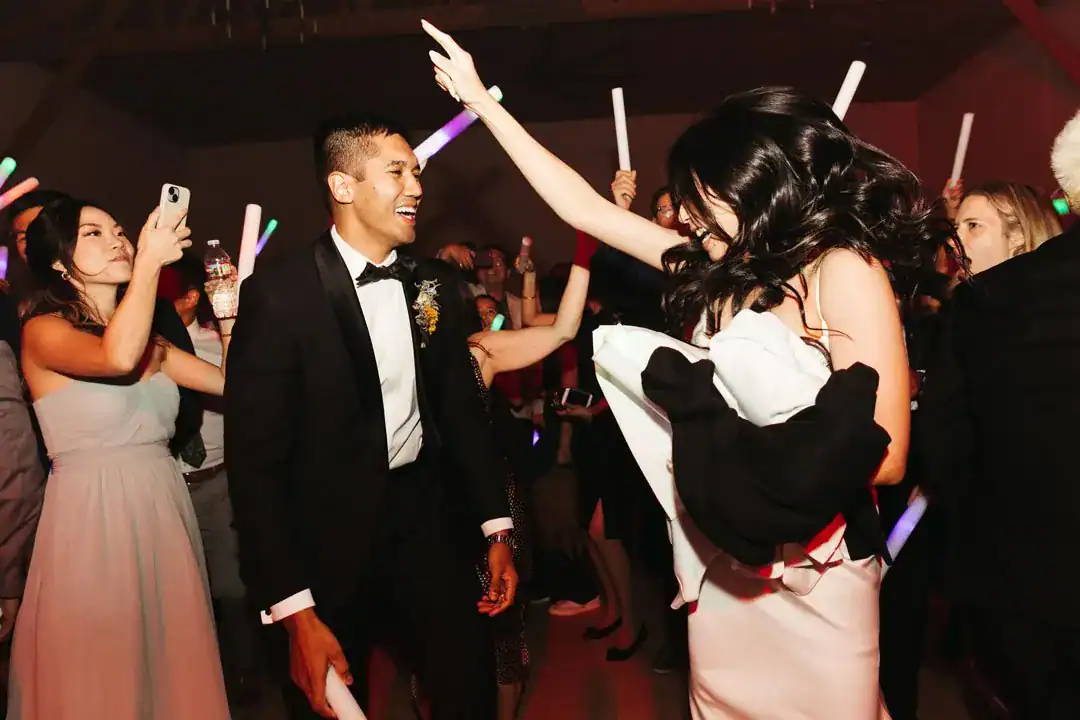
If you want everybody dancing, the first songs of the night should be ones all generations dance to. Save the deep cuts and personal favorites for later, when the floor is warm and guests are willing to follow the music anywhere. Songs that span generations, like classic party songs and recent hits that almost everyone has heard, give a skeptical guest a reason to stand up, from grandparents to your friends.
A familiar song asks very little of a guest, and that small ask is how a dance floor starts to fill.
12. Mix eras and keep transitions tight
Your guest list probably spans several generations, and every group should get a turn. Blend songs from different decades so grandparents, parents, and friends each hear something they recognize. Tight transitions matter just as much. Dead air between songs gives guests a reason to walk to the bar or sit down, and a smooth blend keeps their attention on the floor.
This is one of the most noticeable differences between an experienced wedding DJ and someone playing a playlist. Smooth transitions are some of the wedding dance floor tips guests never notice, and that is the point.

13. Trust your DJ to read the floor, not the playlist
A playlist is a plan, and a room is a living thing. Sometimes a song that looks perfect on paper does not land, and the best move is to change direction quickly. Your DJ watches who is dancing, who is swaying in a chair, and who has drifted away, and adjusts the music to bring those people back.
When couples give their DJ some freedom, the wedding dance floor usually stays fuller. Share your priorities, set your boundaries with the do-not-play list, and let your DJ handle the rest. Of the wedding dance floor tips in this guide, this one asks the most trust.
Look after your guests
People dance when they are comfortable. A few small comforts go a long way toward keeping them on their feet through the end of the night.
14. Have flip flops available for guests
After a ceremony, a cocktail hour, and dinner, many guests are in formal shoes they would be happy to be out of. A basket of flip flops near the wedding dance floor gives guests an easy way to keep dancing without sore feet. It is a small cost, guests appreciate it, and it removes one of the most common reasons people sit out the later songs.
Place the basket where guests will see it, and mention it on your wedding website so they know it is there. Comfort is the most overlooked of the wedding dance floor tips.
Set the tone yourselves
Guests take their cues from the couple, and no timeline or playlist can replace that.
15. Get on the dance floor as much as you can
If you are dancing, your guests will follow. If you spend the night at a table or circling the room for photos, the floor tends to follow that example. This does not mean you have to dance every song. It means that when you are on the floor, make it count, and when you have to step away, have a plan for when you will return.
If your wedding party is comfortable with it, ask them to stay close to the wedding dance floor as well, since they are the guests most likely to pull others in. Your DJ can help by calling you back to the floor when a song you love comes on. The last of our wedding dance floor tips is the one only you can do.

Southern California venue notes
Our work takes us across Los Angeles, Orange County, San Diego, and Temecula, and the venues vary a lot. Many Southern California venues have outdoor reception areas, courtyards, or vineyard grounds, where sound ordinances and end times can differ from one property to the next. Coastal and hillside locations in particular may have restrictions on amplified music after a certain hour, and some properties have separate rooms for dancing that are better suited than the main space.
The simple rule is to ask early. Before you book, ask your venue about sound limits, music end times, lighting options, and whether the bar and any other attractions can be set up in the same space as the DJ. These answers shape your wedding dance floor more than almost any other detail, and they are much easier to plan around before the contract is signed than after. Venue rules shape how well these wedding dance floor tips work in Southern California.
Wedding dance floor tips FAQ
How do I get guests to start dancing at my wedding?
Open with songs your guests know, make the dance floor easy to see, and keep it close to the DJ, the bar, and the other things guests are already doing. If the couple is dancing early, guests are more likely to join. These wedding dance floor tips all start with the first song.
When should the wedding dance floor open at a reception?
Open it as early in the evening as your timeline allows, after the formalities are done. Guests have the most energy early, and an earlier start gives your DJ more time to build the night.
How long should a wedding dance set be?
That depends on your reception length, but the goal is one long, uninterrupted block rather than several short ones. Short sets broken up by announcements make it hard to build momentum.
Should I give my DJ a must-play list?
Yes, and keep it short. A handful of must-plays and a clear do-not-play list give your DJ direction without taking away their ability to adjust to the room.
Does the DJ’s position really matter?
It does. A DJ placed in front of or near the wedding dance floor can see the crowd, respond quickly, and keep guests connected to the music. A DJ placed far away has a harder time reading the room.
What if the venue has sound restrictions?
Ask about them before you book. If restrictions limit volume or end times, find out whether another room or area is available, or whether the dance block can be moved earlier in the evening.
Ready to put these wedding dance floor tips to work?
Tell us about your date and your venue, and we will take it from there. Reach out through our inquiry form and we will follow up.